



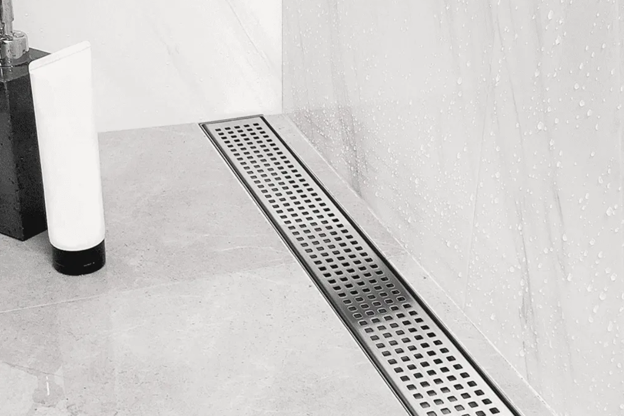
The Middle East has already shifted from traditional drains to linear drains. Linear drains look cleaner, more functional, and more efficient, and they give you more freedom with your tile selection for your shower or outdoor space. A drain designed to be almost invisible and installed alongside the walls is definitely superior to the old round design sitting in the middle of the shower floor. There is no debate there! But the question is: how can you be sure which linear drain works best for your bathroom without trial and error?
If you’re not familiar with the different kinds of drains or how they work, it’s hard to make this decision on your own. That said, if your contractor or designer isn’t an expert in this area, you need a partner who knows their way around shower drains and every upgrade happening in the industry.
Picking a linear drain isn’t as easy as choosing a style from a bunch of photos you see online. You need to consider a whole set of factors when making this decision. These include the material, length, load rating, and installation type of the drain, among others, and getting any one of these wrong can lead to problems that are hard to fix. A wrong drain may create issues such as water pooling, corrosion, or a situation where it cannot handle the shower’s water volume.
At Obaid Masood Building Materials Trading, this is a question we get asked on a regular basis. Contractors, homeowners, MEP engineers, and professionals in the construction and real estate industries across the UAE approach us looking for reliable ways to identify and choose the right linear drain, and this guide answers that question for anyone about to buy a linear drain in the UAE.
Linear Drains: What Are They?
Linear drains are essentially a modern version of drainage channels that are long and narrow in shape. They are installed along a wall or the edge of the bathroom floor, unlike the traditional single-point drain that is installed in the centre of the shower. Rather than flowing toward a central point from all sides, water flows in one direction toward the linear drain. This single-slope design, which easily solves water-pooling problems, is one of the main reasons it has become so popular in modern bathrooms and outdoor patios.
Because the floor only needs to slope one way, you can use larger-format tiles without cutting them into small triangular pieces, creating a seamless look. This is one of the biggest drawbacks of traditional centre drains, where you always have to go for smaller tiles for a clean look.
Where are linear drains used?
A common misconception is that linear drains are only for showers. Are they? Absolutely not!
They are commonly seen in
- Wet floor rooms
- Balconies, terraces, and rooftop drainage
- Curbless and barrier-free showers
- Car park and driveways
- Swimming pool decks
- Commercial kitchen
- Food processing areas
However, you cannot use the same type of linear drain in all of these, since each has different requirements for water volume, load capacity, and finish. That’s why you need an expert’s help choosing the right linear drain for your bathroom.
What to consider before buying linear drains: Key Factors
1. Quality of the material
When purchasing a linear drain, make sure it’s made of 304 or 316 stainless steel. This is crucial because stainless steel resists rust, meaning it handles constant moisture without breaking down. It holds up well even over years of use. If you have to choose between these stainless steel options, choose based on where your project or home in Dubai is. If it’s near the coast, 316 stainless steel, which offers better corrosion resistance, is the best option in high humidity and salty air.
You might come across cheaper options made from certain lower-grade materials such as plastic composites. Although these might offer a small upfront savings, they tend to warp, discolour, or corrode faster than higher-quality options, especially when installed outdoors.
2. Flow capacity
Flow capacity is an often-overlooked aspect when it comes to drains in general. However, this is crucial because the drain must handle water from different sources in the shower. The water volume may come from the shower head, outdoor runoff, or the rainfall system. If you pick a linear drain that looks great but can’t keep up, it will leave you with standing water in the shower. So, if you are installing a rain shower head or have a large outdoor area, choose a drain with a higher flow rate and a wider channel.
3. Length and placement
Linear drains come in all lengths. Their lengths range from 24 inches to 60 inches or more. The right size, the one you want, depends on
- The direction of your floor slope
- Your shower or wet area size
- Whether the drain will run along the wall or the threshold
4. Grate style and finish of the drain
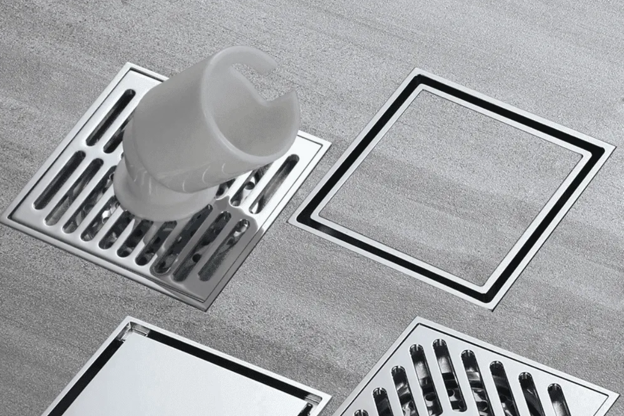
If you have been in the market for linear drains, you’ve likely come across a few grate options. You must have seen
- Perforated or slotted stainless steel grates
- Tile insert grates, where you fit your own tile into the corner for a near-invisible finish
- Wedge wire grates for higher flow rates
For a cohesive look, make sure the finish you pick is brushed steel, steel black, or polished chrome, and that it matches the theme of your bathroom.
5. Ease of maintenance and cleaning
Whenever you purchase a linear drain, pay attention to two important things: whether it has a removable grate and a hair strainer, also known as a debris basket. These features make ongoing maintenance easier, since soap and hair buildup are the most common problems. Some drains require unscrewing multiple parts just to clean them, and they tend to get neglected over time.