


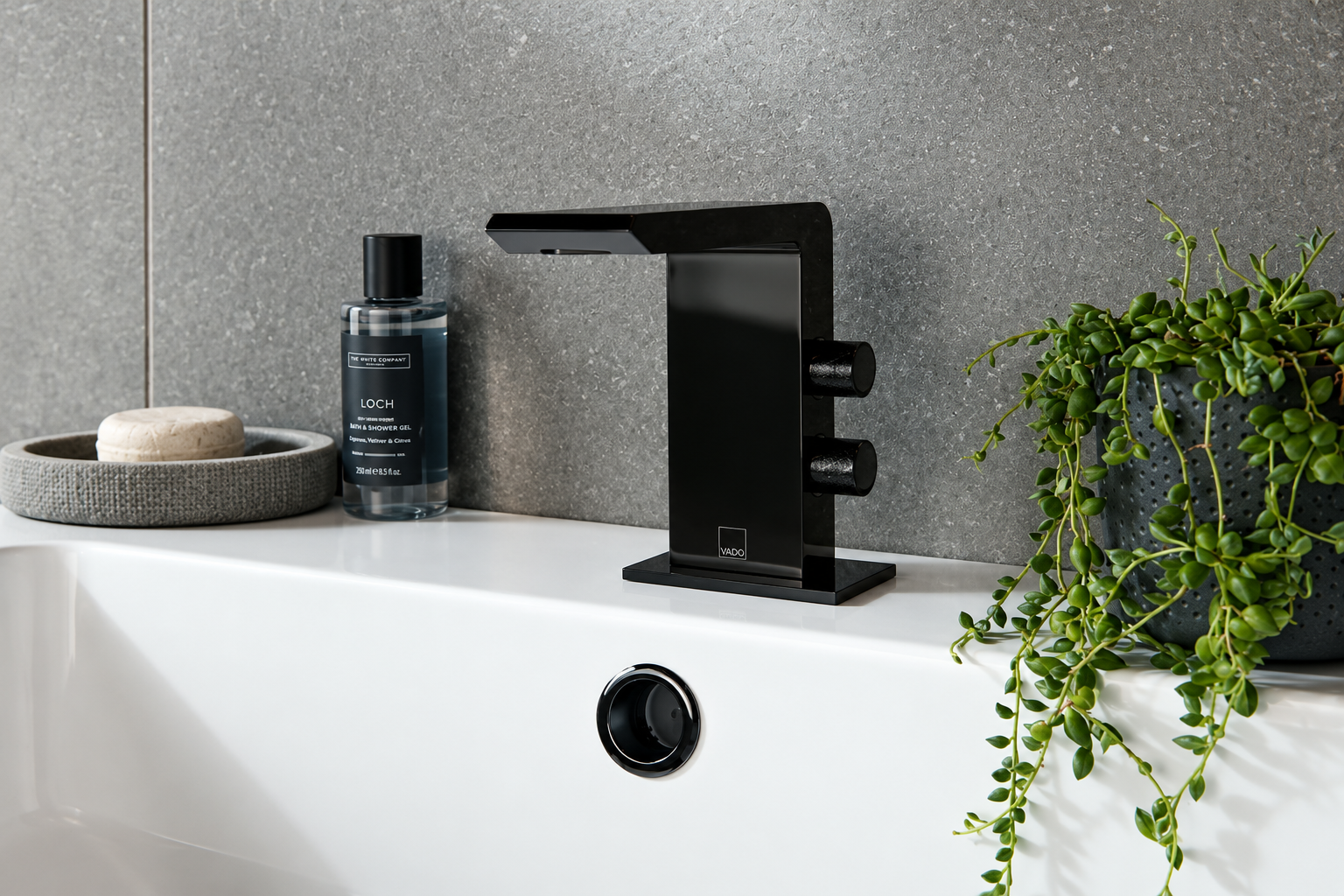
White spots on a bathroom tap can look harmless, but stubborn mineral deposits can make even a relatively new fitting appear worn. In hard-water areas, choosing the right product involves more than selecting an attractive finish. The underlying metal, surface treatment, water chemistry and cleaning routine all influence how well it holds up. Chrome, stainless steel and brass each have different properties, and they are not directly equivalent materials. Understanding these differences helps homeowners and contractors choose sanitary fittings that remain functional and presentable with appropriate care.
What Hard Water Does to Sanitary Fittings
Hard water contains dissolved minerals, primarily calcium and magnesium. When droplets dry on a tap or shower fitting, these minerals can remain behind as white spots or chalky deposits. The mineral scale can also accumulate inside plumbing components and restrict water flow over time.
Mineral deposits and actual wear are different problems, and identifying the difference helps determine the right cleaning method.
Common signs to watch for include:
- White or cloudy marks: Usually mineral residue left after water evaporates.
- Persistent rough patches: May indicate accumulated scale that needs careful removal.
- Peeling or flaking: Can suggest a failing plated or coated finish.
- Pitting or discolouration: May indicate corrosion or another surface problem that requires closer inspection.
Regular care matters because deposits become harder to remove when left unattended. For sanitary fittings, the aim is to remove residue without scratching the finish or exposing the underlying metal to unsuitable cleaning chemicals.
Chrome, Stainless Steel and Brass: What Are You Actually Comparing?
Before comparing durability, it helps to understand what each term describes. The visible surface does not always reveal the material underneath.
- Chrome-plated fittings: It is a thin metallic coating applied over a base material, often brass. Its smooth, reflective appearance is popular in bathrooms, but long-term performance depends on plating quality, adhesion and care. Scratches or damaged plating can expose the substrate.
- Stainless steel fittings: An alloy containing chromium, which helps form a protective surface layer. Its corrosion resistance varies by grade, finish and exposure. The chlorides, surface deposits and environmental conditions can influence corrosion, including localised pitting.
- Brass-bodied fittings: Brass is an alloy of copper and zinc commonly used to manufacture tap bodies and plumbing components. It may be polished, lacquered or chrome-plated, so the visible finish can differ considerably between products. Durability depends on alloy quality, manufacturing and any protective surface treatment.
For buyers comparing sanitary fittings, the important question is whether they are assessing the body’s material, the external finish or the complete product. Those distinctions affect both maintenance and expected service life.
Which Material Performs Best in Hard Water?
Stainless steel can offer strong corrosion resistance when the correct grade is used, while quality chrome plating provides a durable, easy-to-clean surface. Brass can also perform well as a fitting body, depending on its composition and protective finish.
| Option | Potential strength | Main consideration |
| Chrome-plated brass | Smooth, reflective finish that is relatively easy to clean | Damaged plating can expose the base metal |
| Stainless steel | Corrosion resistance depends on the grade and surface condition | Mineral spots can still appear; grade matters |
| Brass with a protective finish | Robust base material suitable for many tap designs | Performance depends on the alloy and outer coating |
Hard water can leave deposits on all three options. A smoother surface may be easier to wipe clean, but that does not guarantee immunity to staining or deterioration. We recommend regular, gentle cleaning in hard-water areas.
For sanitary fittings, the best choice is a well-made product with a suitable body material, a reliable finish, and clear maintenance instructions. Product specifications matter more than the material name alone.
What Determines a Sanitary Fitting’s Actual Lifespan?
A fitting’s service life depends on manufacturing quality, internal components, and daily use, all of which affect how long it stays reliable. Even a corrosion-resistant surface cannot compensate for a poorly made cartridge, weak seals or an unsuitable installation.
Before buying, pay attention to these factors:
- Construction quality: Check the manufacturer’s specifications for the body material, finish and internal components.
- Water chemistry: Chlorides, cleaning residues and mineral deposits can affect surfaces differently. Hardness alone does not determine corrosion risk.
- Finish application: Consistent plating or coating, proper adhesion and suitable surface preparation influence resistance to wear.
- Maintenance habits: Abrasive pads and harsh chemicals can damage finishes, shortening their useful appearance.
- Repairability: Replaceable cartridges, seals and accessible spare parts can extend practical service life.
Sanitary fittings should come with a clear warranty and reliable after-sales support. They help buyers understand coverage and arrange repairs without replacing an entire tap unnecessarily.
How to Choose Sanitary Fittings for Hard-Water Areas
A little checking before purchase can prevent avoidable maintenance problems later. Use these steps to assess products against your household’s water conditions and practical requirements.
1 .Understand your water supply.
If deposits appear frequently, obtain a water-hardness report where possible. Ask about chloride levels if corrosion is also a concern.
2. Identify the actual construction.
Confirm whether the tap has a brass body with chrome plating, a stainless steel body, or another material and finish combination. Do not rely on appearance alone.
3. Request technical details.
Review the manufacturer’s specifications, finish information, applicable testing and care instructions. For stainless steel, check the grade rather than assuming all varieties perform equally.
4. Assess cleaning requirements.
Choose a product whose finish can be maintained with readily available, manufacturer-approved cleaning methods. Special care requirements may become inconvenient with frequent mineral deposits.
5. Compare warranty and repair support.
Check what the warranty covers, including finish defects, internal components and exclusions related to water quality or cleaning products.
6. Consider replacement parts.
Confirm that cartridges, seals and other serviceable components can be obtained when needed. A repairable fitting may offer better practical value than one that must be replaced completely.
When comparing Sanitary fittings, weigh the specifications, expected maintenance and support together. A higher purchase price alone does not guarantee longer service life.
Keeping Your Fittings in Better Condition
Use this simple maintenance checklist to keep everyday wear under control:
- Wipe surfaces dry after use where practical.
- Remove mineral deposits regularly using an approved cleaner.
- Avoid abrasive pads and unapproved acidic chemicals.
- Rinse away cleaning residue and dry with a soft cloth.
- Investigate persistent pitting, peeling or reduced water flow.
Always follow the manufacturer’s care instructions, as different finishes tolerate different cleaning products.
Build Better. Choose with Confidence
The right fitting should suit your water conditions, daily usage and maintenance expectations. Obaid Masood offers a range of building materials and sanitary products for residential and commercial requirements. Contact us and speak with our team to discuss product specifications, availability and suitable options for your project and make a more informed choice for your next bathroom or plumbing installation.